 How-to
What Is Door-Through-Door Service? Medical Transport Explained
Table of Contents
- What Door-Through-Door Service Actually Means
- Door-Through-Door vs. Curb-to-Curb vs. Door-to-Door
- Non-Emergency Medical Transportation Requirements You Should Know
- Ambulatory vs. Wheelchair Transport Services: Which Level Do You Need?
- How to Book Medical Transport for Seniors: A Step-by-Step Process
- What Door-Through-Door Service Costs and How Insurance May Help
- Safety Standards, Liability, and What to Look For in a Provider
- Conclusion
- Frequently Asked Questions
Last Updated: September 25, 2026
What Door-Through-Door Service Actually Means
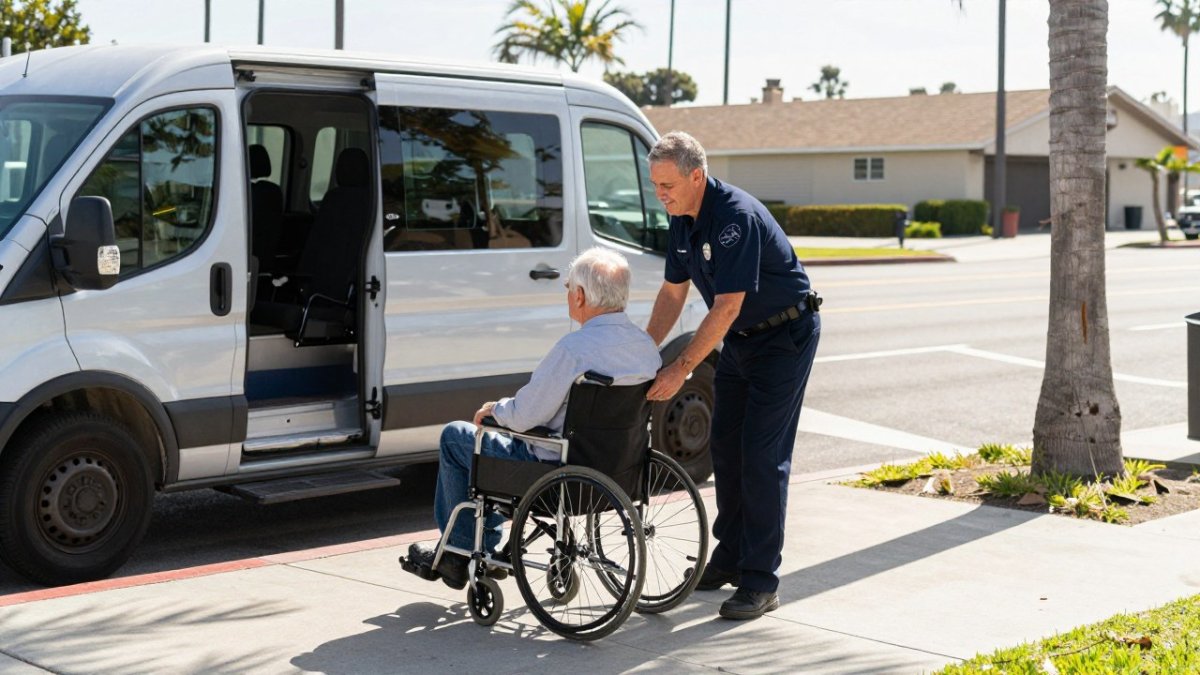
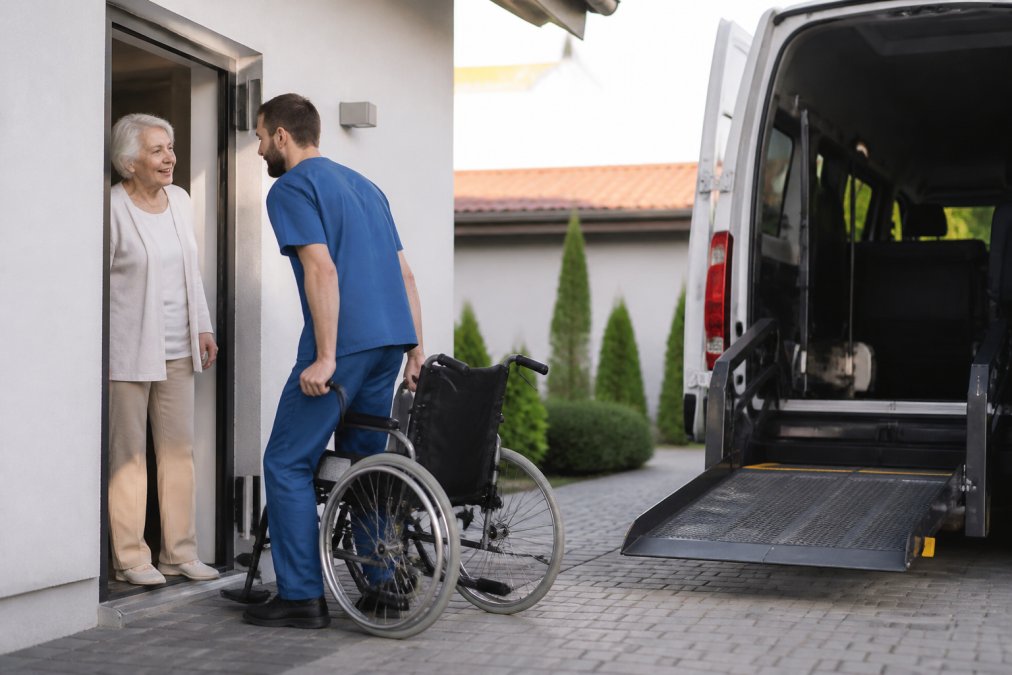
Door-through-door service is a type of non-emergency medical transportation where a trained driver or crew member helps a passenger door through door, from inside their home, into the vehicle, and then repeats that help at the destination. It goes beyond simply picking someone up at the curb.
Door-Through-Door vs. Curb-to-Curb vs. Door-to-Door
The three service levels differ mainly in how much physical help the passenger gets.
- Curb-to-curb: The driver waits at the curb. The passenger gets in and out alone.
- Door-to-door: The driver meets the passenger at the building entrance, but does not go inside.
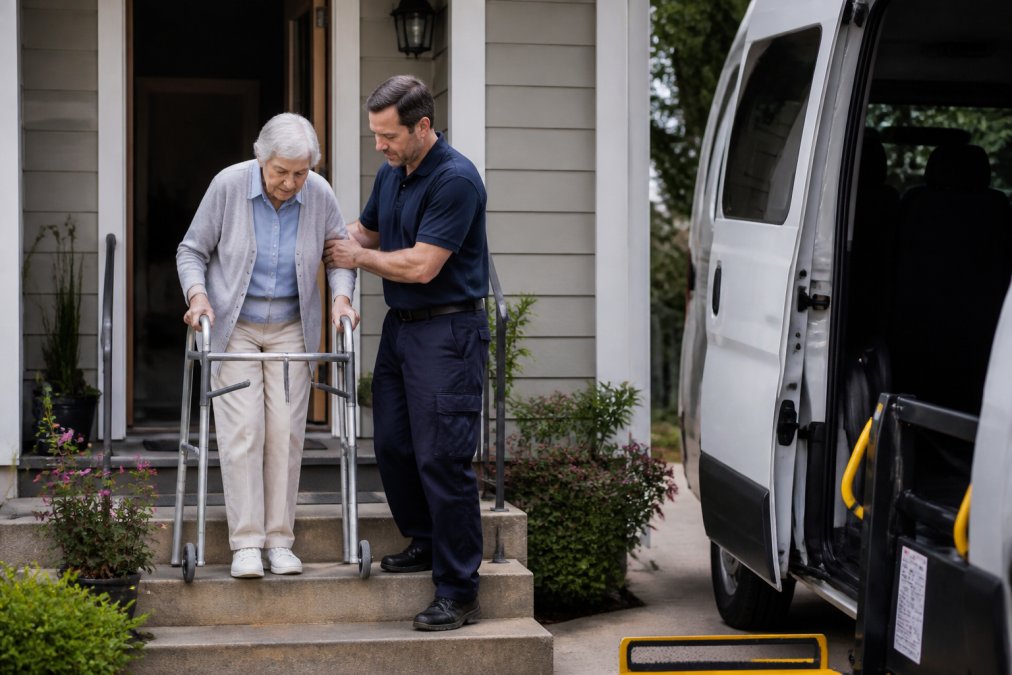
- Door-through-door: The driver or crew enters the home, helps the passenger through interior spaces, and assists all the way to the destination door.
Non-Emergency Medical Transportation Requirements You Should Know
Non-emergency medical transportation requirements vary by payer and provider, but a few rules apply almost everywhere.
Here is what to check before you book:
- Does the provider require advance notice, or offer same-day rides?
- Are vehicles ADA compliant and wheelchair accessible?
- Does the crew carry EMT or BLS certification?
- Is the company HIPAA compliant for handling medical details?
Ambulatory vs. Wheelchair Transport Services: Which Level Do You Need?
Ambulatory vs. wheelchair transport services come down to how much the passenger can do independently.
| Service Level | Who It Fits | Vehicle Feature |
|---|---|---|
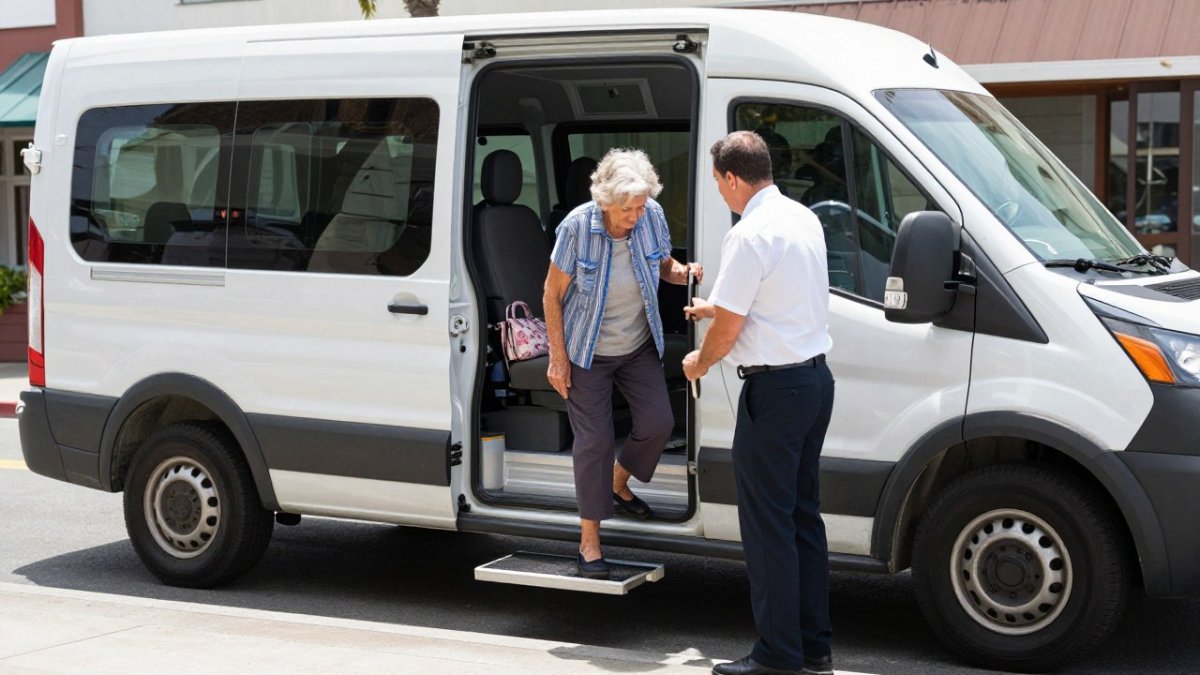
| Ambulatory | Walks with a cane or walker | Standard seating, step help |
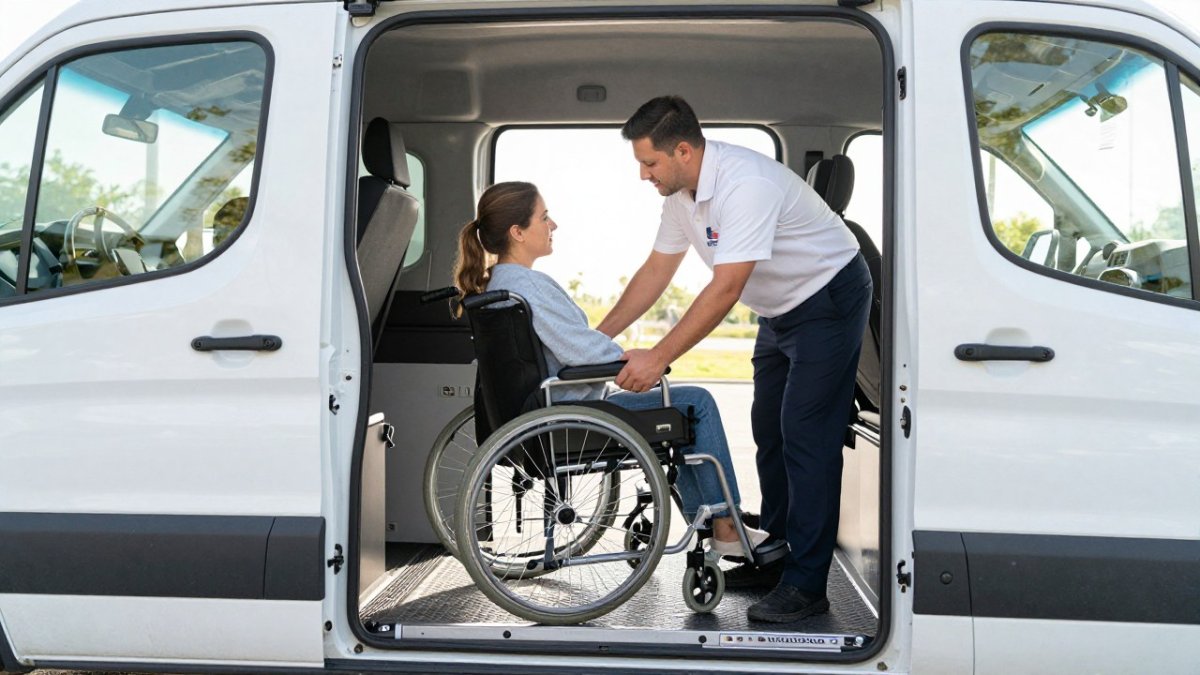
| Wheelchair | Uses a wheelchair full-time | Lift or ramp, tie-downs |
| Gurney | Must remain lying down | Gurney and straps |
How to Book Medical Transport for Seniors: A Step-by-Step Process
Booking is straightforward once you know what the scheduler needs and what to have ready on pickup day.
Before the call: gather these five things.
- The exact pickup address, including apartment or unit number and gate code
- The destination address and the appointment time, plus the expected end time
- The passenger's mobility level: ambulatory with a cane or walker, wheelchair, or gurney
- A short description of the path from the front door to the vehicle, steps, narrow hallways, tight doorways, elevator, or a long walk to the curb
- Medical notes the crew should know: dementia, anxiety, oxygen use, recent surgery, or pain that makes transfers difficult
The booking call, step by step:
- State the service level. Say whether the passenger is ambulatory, in a wheelchair, or needs a gurney. This determines the vehicle and crew, so getting it right up front prevents a wasted trip.
- Describe the space honestly. Mention stairs, narrow hallways, tight doorways, or a long approach to the curb. This is where door-through-door help matters most, and it is the detail families most often leave out.
- Confirm the return trip. Ask whether the crew will wait on standby or come back at a scheduled time. Standby is simpler but usually billed hourly; a return pickup is cheaper but requires a call when the appointment ends.
- Share medical and behavioral notes. Flag dementia, anxiety, or pain so the crew can prepare and pace the assistance appropriately.
- Ask what the crew can and cannot do inside the home. This is the boundary most families never think to ask about. A door-through-door crew can typically help the passenger walk, steady them on stairs, assist with a transfer from a chair or bed, and carry a small bag. A crew generally cannot administer medication, perform medical procedures, lift a passenger who has fallen, or move heavy furniture out of the path. If the passenger needs a mechanical lift or a two-person transfer, say so at booking, that changes the crew size and the price.
- Get the pickup window in writing. Ask for a window, not a single time, and confirm the driver will call or text on arrival.
- Confirm the handoff. Ask whether the crew escorts the passenger to the clinic desk and stays through check-in, or hands off at the door. Door-through-door service usually includes the escort to the destination door; check-in assistance varies by provider.
On pickup day: have these ready.
- The passenger dressed, with shoes on, and waiting near the door
- A clear path from the door to the vehicle, move shoes, rugs, and clutter out of the way
- Any mobility aid the passenger uses, plus a backup if the primary aid is unreliable
- Insurance card, ID, and a list of medications
- A phone number for the family contact and for the clinic
- A small bag with water, a snack, and a light jacket
What Door-Through-Door Service Costs and How Insurance May Help
Door-through-door pricing is not a single rate, it is built from four variables, and knowing them lets you predict your bill before you book.
The four pricing variables:
- Distance and zone. Most providers price by loaded mile or by a flat zone (for example, a base zone plus a per-mile charge beyond it). A cross-town medical trip and a cross-county trip are priced differently even at the same service level.
- Service level. Ambulatory, wheelchair, and gurney transport carry different rates because they require different vehicles, crew sizes, and equipment. Gurney transport is typically the highest because it needs a stretcher-equipped vehicle and often a two-person crew.
- Wait time and standby. If the crew waits with you through a dialysis session or a long appointment, expect an hourly standby charge after a grace period. Ask what the grace period is, commonly 15 to 30 minutes, and what the hourly rate is after that.
- After-hours and same-day surcharges. Early-morning dialysis runs, evening discharges, and same-day requests often carry an added fee. Booking a day or more ahead usually avoids it.
Who pays: a payer-by-payer look.
- Medicaid. Medicaid requires states to cover non-emergency medical transportation to covered services for eligible members, and many states use brokers or managed-care plans to arrange those rides. Coverage rules, mileage limits, and whether door-through-door assistance is included vary by state and by plan, so confirm with your state Medicaid agency or your managed-care plan before you assume a ride is covered.
- Medicare. Original Medicare generally does not cover routine non-emergency transportation to and from medical appointments. Some Medicare Advantage plans include transportation benefits as a supplemental benefit, and the number of covered rides and the mileage allowance differ by plan. Read your plan's Evidence of Coverage or call member services.
- Veterans' benefits. The Department of Veterans Affairs offers transportation support for eligible veterans traveling to VA-authorized care, including beneficiary travel benefits and volunteer driver programs. Eligibility depends on service-connected status and income, so check with your VA facility's travel office.
- Private insurance and long-term care policies. Some plans include a limited number of non-emergency transport rides per year, and some long-term care policies reimburse transport. These benefits are usually buried in the plan documents, not advertised.
- Out of pocket. When no payer covers the trip, you pay the provider directly. Ask whether the provider bills insurance on your behalf or expects payment at the time of service, and whether they accept assignment from Medicaid or VA.
Before you book, write down three numbers: your plan's transport benefit limit, the provider's standby rate, and the after-hours surcharge. Those three numbers explain most of the difference between a quoted price and a final bill.
What to ask your insurer, in order:
- Does my plan cover non-emergency medical transportation, and is door-through-door assistance included?
- Is there an annual ride limit or a mileage cap?
- Does the plan require prior authorization, and how many days ahead?
- Does the plan pay the provider directly, or do I pay and seek reimbursement?
- Which providers are in network for transport in my area?
Safety Standards, Liability, and What to Look For in a Provider
Safety and passenger safety come down to training, vehicles, and clear protocols.
A provider that cannot explain its crew training or vehicle accessibility is a risk. If a company won't answer basic questions about certifications, look elsewhere.
Liability and safety standards to confirm:
- Proper insurance coverage for medical transport
- ADA-compliant, well-maintained vehicles
- HIPAA compliance for patient privacy
- Documented caregiver support and handoff at the destination
Conclusion
Coordinating safe rides for a parent or patient is one of the hardest parts of caregiving. A door-through-door provider removes that weight by handling the whole trip, from the front door to the clinic desk.
Frequently Asked Questions
Does Medicare cover non-emergency medical transportation?
Original Medicare generally does not cover routine non-emergency medical transportation, though some Medicare Advantage plans may include it as a supplemental benefit. Coverage rules vary by plan, so check your specific policy documents. Medicaid often covers non-emergency medical transport for eligible beneficiaries, and some states offer additional programs. Always confirm coverage with your plan before scheduling recurring rides.
What is the difference between door-to-door and door-through-door service?
Door-to-door service means the driver picks you up at your door and drops you at the destination entrance. Door-through-door goes further: the driver or escort enters your home, helps you navigate hallways and stairs, walks you to the vehicle, and accompanies you inside the clinic to the check-in desk. For someone with mobility limitations, cognitive challenges, or a wheelchair, that extra assistance can be the difference between making an appointment and missing it entirely.
What level of assistance is provided during door-through-door transport?
Assistance typically includes help with walking, navigating steps and curbs, transferring into and out of the vehicle, and escorting you to your appointment check-in. Crews trained in passenger safety may also assist with mobility aids such as walkers or wheelchairs. If you need transfer assistance or have specific medical needs, tell the provider when booking so they can assign the right crew and vehicle. Door-through-door service is not medical care, but it does bridge the gap between your front door and the exam room.
How do I qualify for specialized medical transportation services?
Eligibility depends on the provider and the funding source. For Medicaid-funded rides, you typically need to meet your state's criteria and have a medical appointment that qualifies. Private providers like Ready Steady Transportation Services generally serve anyone with a medical need, including seniors, people recovering from surgery, and individuals with disabilities. When you call, explain your mobility level and appointment type. The provider will recommend ambulatory, wheelchair, or gurney transport based on your needs. No formal diagnosis is required for private-pay service.