 Listicle
Top 5 Medical Transport Options for Dementia Patients in 2026
Last Updated: November 19, 2026
Quick Summary
The top 5 medical transport options for dementia patients are NEMT for routine appointments, wheelchair transportation, gurney transport for patients who cannot sit upright, long-distance ground travel, and air ambulance or medical escort flights. Match the option to what your person can physically do today and how much confusion they can manage in an unfamiliar space.
- Book a private ride with a trained attendant if your person becomes agitated in crowds or unfamiliar vehicles.
- Door-through-door service means the crew comes inside and helps with the transfer, not just meets you at the curb.
- For trips over roughly 300 miles, families usually weigh ambulatory van, wheelchair or gurney transport, or a commercial flight with a medical escort.
- Original Medicare may cover ambulance transport when medically necessary but generally does not cover ambulatory or wheelchair van rides.
- Ask whether crews are EMT or BLS certified and trained in dementia care before booking any ride.
Table of Contents
- How to Match Dementia Symptoms to the Right Medical Transport Option
- 1. Non-Emergency Medical Transportation (NEMT) for Routine Appointments
- 2. Wheelchair Transportation for Seniors Who Need Mobility Support
- 3. Gurney Transport for Patients Who Cannot Sit Upright
- 4. Long-Distance Medical Transport Cost and Ground Travel Options
- 5. Air Ambulance and Medical Escort Flights for Complex Needs
- Questions to Ask and Credentials to Verify Before Booking
- Book a Ride with Ready Steady Transportation Services
- Frequently Asked Questions
How to Match Dementia Symptoms to the Right Medical Transport Option
Choosing among the top 5 medical transport options for dementia patients starts with one question: what can your person physically do today, and how much confusion can they manage in an unfamiliar space? Alzheimer's disease and other dementias can change both mobility and orientation, often on the same day, so those two answers are a useful starting point.
Medical transport options for dementia patients generally fall into several practical categories, including non-emergency medical transportation (NEMT), wheelchair transportation, gurney transport, long-distance ground travel, and air ambulance or medical escort flights. Each fits a different combination of mobility and anxiety.
A Decision Tree for Mobility, Anxiety, and Medical Needs
Use this sequence before you book anything:
- Can they walk from the front door to a vehicle seat with a steadying arm? If yes, ambulatory NEMT fits.
- Can they sit upright in a wheelchair for 20 minutes or more? If yes, wheelchair van transport fits.
- Can they not sit upright safely, or does a physician require a lying position? Then you need gurney transport.
- Is the trip beyond roughly 300 miles? Move to long-distance ground or air options.
- Is there an active emergency, or continuous monitoring need? Call 911 or use ambulance service, not a scheduled ride.
Anxiety adds a second layer. If your person becomes agitated in crowds or unfamiliar vehicles, book a private ride with a trained attendant rather than a shared shuttle. If they wander or exit vehicles unexpectedly, ask providers how they handle door supervision and whether their crews have dementia-care training.

1. Non-Emergency Medical Transportation (NEMT) for Routine Appointments
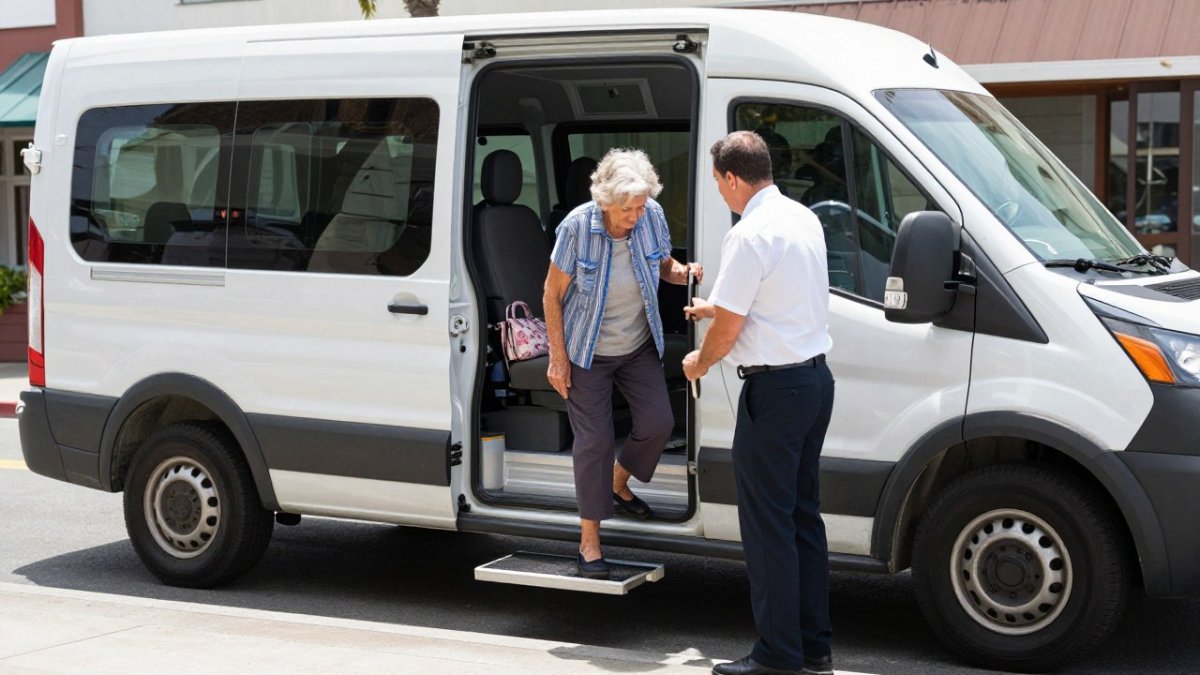
NEMT is scheduled, non-urgent transport to dialysis, oncology, primary care, and therapy visits.
Best for: ambulatory patients who need a steadying arm, door-through-door help, and a reliable pickup window.
Skip if: your person cannot sit upright or needs continuous clinical monitoring.
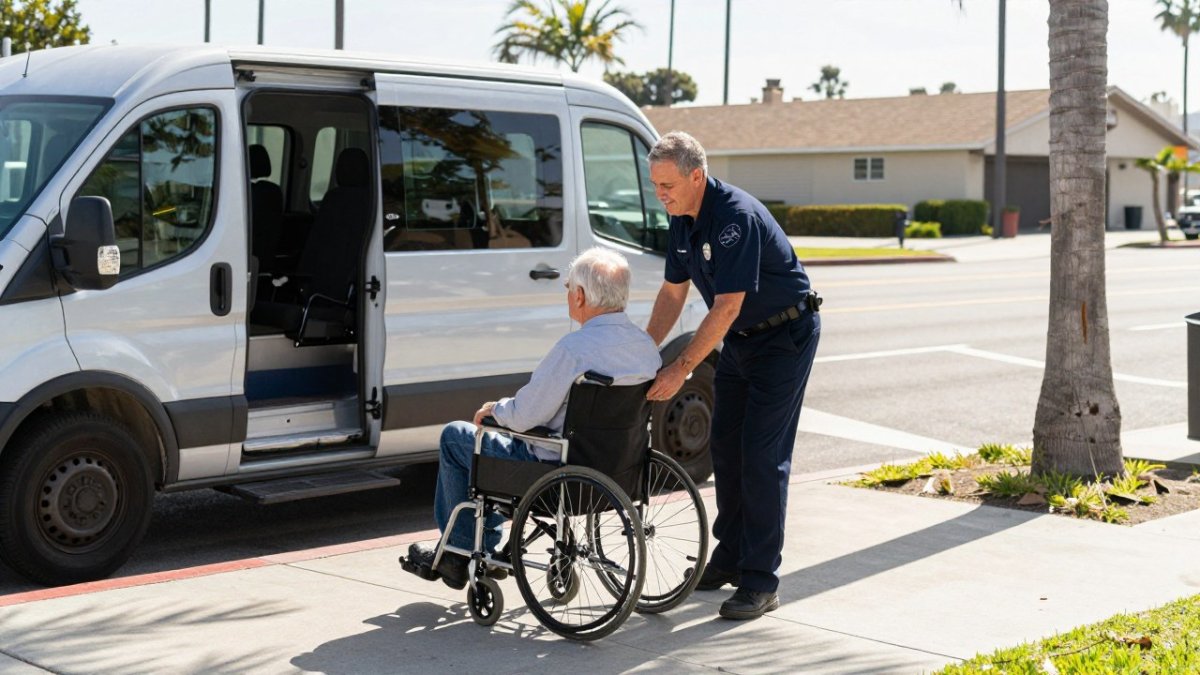
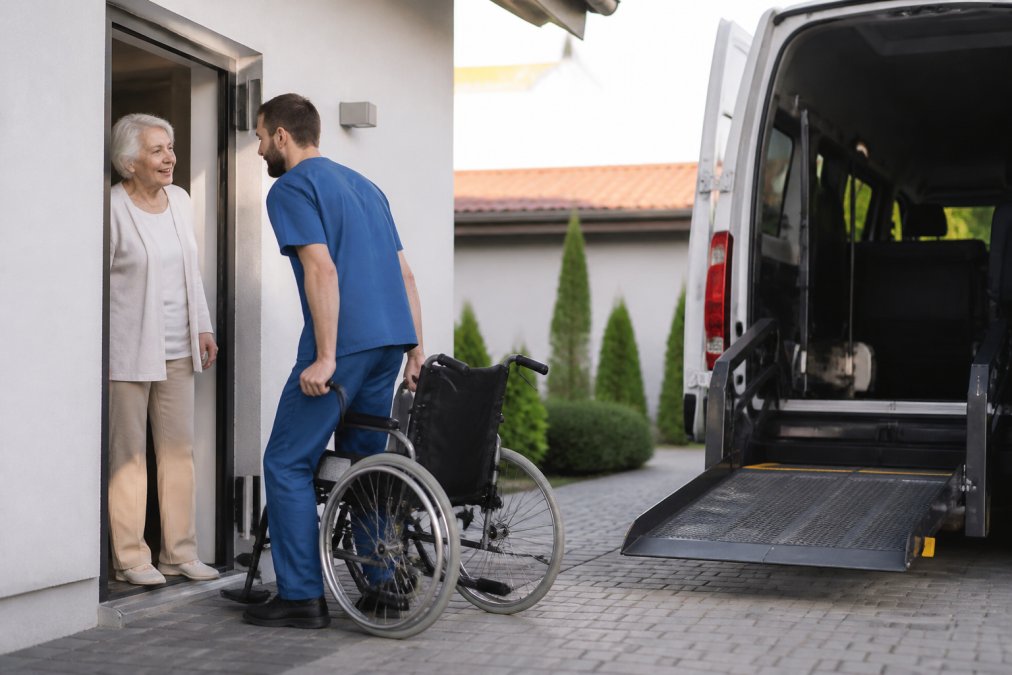
What separates a good NEMT ride from a bad one is the handoff. Door-to-door means the driver meets you at the curb. Door-through-door means the crew comes inside and helps with the transfer.
A common mistake: booking a curb-side ride for someone who cannot manage the front steps alone.
2. Wheelchair Transportation for Seniors Who Need Mobility Support
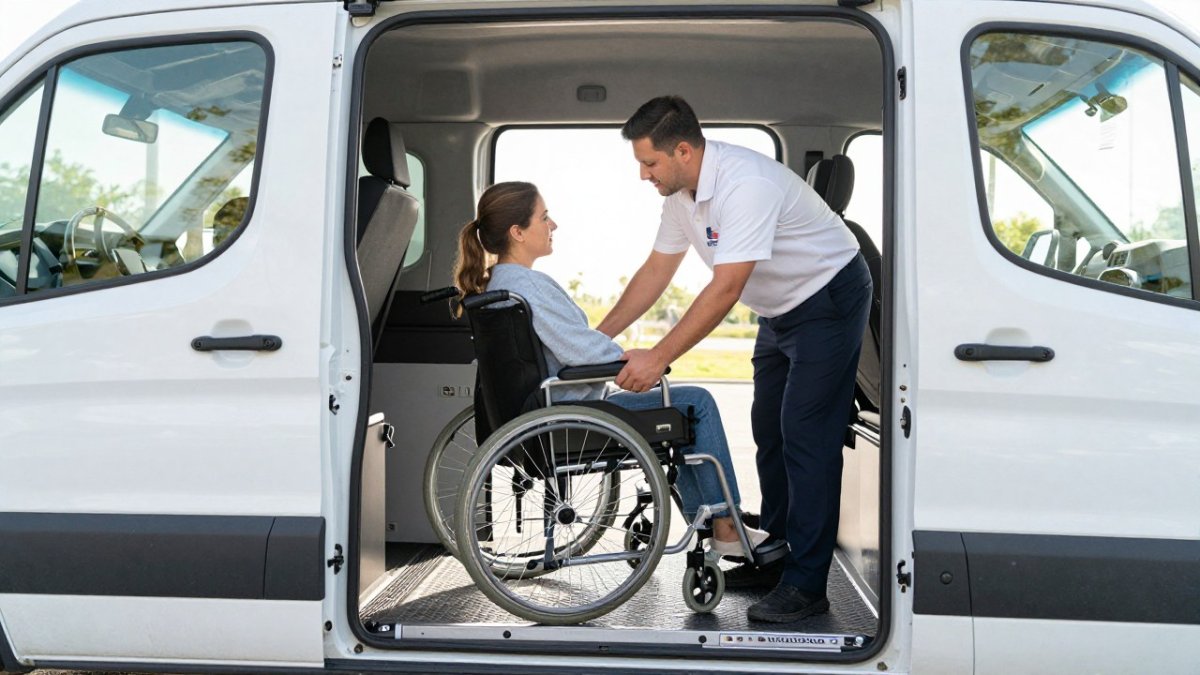
Wheelchair transportation for seniors uses ADA-compliant vehicles with lifts or ramps, and it fits patients who can sit upright but cannot safely transfer or walk distances.
Best for: wheelchair users with medical appointments, including narrow hallways and tight bathroom doors at home that require careful maneuvering.
Skip if: your person cannot tolerate sitting upright for the length of the trip.
Ask two questions before you book. First, does the crew come inside to help position the chair? Second, are the drivers trained to work with someone who has dementia and may resist transfers?
3. Gurney Transport for Patients Who Cannot Sit Upright
Gurney transport, sometimes called stretcher van service, moves patients in a lying position when sitting is unsafe or painful. Post-surgical follow-ups, fragile patients, and some hospice transfers fall here.
Best for: patients whose physician has restricted upright sitting, or who are in pain during transfers.
Skip if: the patient is stable sitting up in a wheelchair; gurney transport adds cost and handling you do not need.
Why Dementia Changes the Gurney Decision
A patient who can sit upright in a wheelchair but becomes agitated or combative when lying flat may still be a poor gurney candidate, even if a physician ordered a lying position. The clinical order and the behavioral reality have to be reconciled before booking. Ask the ordering clinician whether a reclining wheelchair or a semi-upright stretcher position is acceptable; some gurneys adjust, and a slight incline may reduce distress without violating the order.
What to Ask the Gurney Crew
Here the crew matters more than the vehicle. A nervous patient being moved onto a gurney needs calm, practiced hands. Ask:
- Does the crew hold EMT or BLS certification, and have they handled anxious or dementia patients before?
- Can the stretcher be positioned at a partial incline if the patient tolerates it better?
- How do they handle a patient who tries to sit up or unbuckle mid-ride?
- Will a caregiver be allowed to ride alongside and stay in the patient's line of sight?
A common mistake is assuming any medical van can do gurney work; many cannot, and fewer still have crews trained to calm a confused patient during the transfer. Be cautious with a provider quoting a single attendant for stretcher work, since handling a stretcher safely typically calls for more than one person.
Reducing Distress During a Lying Transfer
Small accommodations make the transfer easier. Keep a familiar object, such as a blanket or handbag, within reach. Explain each step in short, calm sentences before it happens. Ask the crew to move slowly and to narrate the transfer. If the patient is prone to exiting the stretcher, confirm the crew's restraint and supervision protocol in advance rather than at the door.
4. Long-Distance Medical Transport Cost and Ground Travel Options
Long-distance medical transport cost depends on distance, vehicle type, crew credentials, and whether a caregiver rides along. Pricing for Ready Steady Transportation Services depends on the specifics of each trip; please request a quote or check the company website for current information.
For trips over roughly 300 miles, families usually weigh three choices:
- Ambulatory long-distance van: lowest cost, best for patients who walk with help.
- Wheelchair or gurney long-distance transport: higher cost, needed when mobility is limited.
- Commercial flight with a medical escort: faster for very long distances, priced separately.
Best for: moves between states, transfers to a specialist center, or relocating a parent closer to family.
Skip if: the trip is local; a standard NEMT ride is simpler and cheaper.
What Actually Drives the Quote
A long-distance quote is often more than one line. Common line items include mileage, the number of crew members required, overnight lodging on multi-day trips, wait time, tolls, and the return leg. Equipment-based trips such as wheelchair or gurney transport can carry different costs than ambulatory rides.
Ask for an all-in figure for the exact door-to-door route, including the return leg, so that overnight and wait-time costs are not left out.
Payer Sources to Check Before You Pay Out of Pocket
Coverage and eligibility vary, so confirm each of these directly rather than assuming:
- Medicare: Original Medicare may cover ambulance transport when it is medically necessary and the patient cannot be transported safely by other means; it generally does not cover ambulatory van or wheelchair van rides. Confirm coverage with Medicare directly at medicare.gov, since rules and documentation requirements vary.
- Medicaid NEMT: many state Medicaid programs cover non-emergency medical transportation to covered services, but eligibility, advance-notice rules, and whether long-distance or out-of-state trips qualify differ by state. Check your state Medicaid program for its rules.
- Long-term care insurance and veterans' benefits: some policies and VA programs reimburse or arrange transport; read the policy's transport exclusions.
- Provider payment plans: some long-distance providers offer installment billing for cross-state moves.
Get the coverage answer in writing before you schedule, since families often assume a wheelchair van to a specialist is covered when it may not be.
Get the quote in writing and confirm what it includes, such as wait time, tolls, overnight crew costs, and the return leg.
5. Air Ambulance and Medical Escort Flights for Complex Needs
Air ambulance and medical escort flights serve long distances and complex medical needs. An air ambulance carries clinical crews and equipment for patients who need monitoring in transit.
Best for: cross-country transfers and patients who cannot tolerate a multi-day drive.
Skip if: the patient is stable and the distance is manageable by ground; flights add cost and airport logistics.
Air travel with dementia brings its own friction: security lines, crowds, and gate changes can trigger confusion.
| Option | Best For | Mobility Level | Relative Cost | Crew |
|---|---|---|---|---|
| NEMT ambulatory | Routine appointments | Walks with help | Lowest | Trained driver |
| Wheelchair transport | Wheelchair users | Sits upright | Moderate | Trained attendant |
| Gurney transport | Cannot sit upright | Lying position | Higher | EMT/BLS crew |
| Long-distance ground | Cross-state moves | Varies | Base plus mileage | Varies |
| Air ambulance/escort | Complex, far trips | Clinical monitoring | Highest | Flight nurse |
Questions to Ask and Credentials to Verify Before Booking
Ask these before you book any dementia transport:
- Are your crews EMT or BLS certified, and are drivers trained in dementia care?
- Do you offer door-through-door service, including help inside the home?
- What is your on-time policy, and what happens if a ride is late?
- How do you handle a patient who becomes agitated mid-ride?
- Are your vehicles ADA-compliant with lift and ramp options?
- Is the company HIPAA compliant, and how is patient information shared?
- Can you provide a written quote with all fees itemized?
- What is your cancellation policy?
For general guidance on transportation programs for older adults, the National Aging and Disability Transportation Center publishes family resources, and Medicare's official coverage information explains which medical trips may qualify for coverage. Confirm eligibility directly with the program, since rules vary.
Book a Ride with Ready Steady Transportation Services
Matching a dementia patient to the right ride takes judgment, and the wrong choice costs more than money. Ready Steady Transportation Services provides door-through-door ambulatory, wheelchair, and gurney transport with EMT and BLS-certified crews and ADA-compliant vehicles with lift and ramp options. We serve Santa Cruz, Monterey, Silicon Valley, San Jose, and the South Bay, and we coordinate scheduling for families and care facilities. Get started with Ready Steady Transportation Services by booking a ride.
Frequently Asked Questions
Does Medicare pay for medical transport options like NEMT or wheelchair vans?
Original Medicare generally does not cover non-emergency medical transportation unless it is part of a covered ambulance trip. Some Medicare Advantage plans offer limited NEMT benefits, and Medicaid may cover rides to medical appointments in certain states. Check your specific plan's evidence of coverage or call the member services number to confirm eligibility before booking. For private-pay options like wheelchair transportation for seniors, ask the provider for a written quote.
Can a person with dementia travel safely in a wheelchair van?
Yes, a wheelchair van is often the best fit for someone with dementia who can sit upright but has mobility limitations. Ask providers whether their attendants can help with door-through-door transfers, secure the wheelchair properly, and watch for signs of anxiety during the ride. Ask whether the crew has dementia-specific training and whether a family member can ride along. Ready Steady Transportation Services offers ADA-compliant vehicles with lift and ramp options.
When does someone with dementia need gurney transport instead of a wheelchair?
Gurney transport for patients is appropriate when the person cannot sit upright for the length of the trip, has severe pain with movement, or needs to remain lying flat due to a medical condition. It is also used after certain surgeries or when a wheelchair transfer would be unsafe. Ask your care team whether a stretcher van is medically appropriate, and confirm the provider's crew certifications and vehicle type before booking.
What should caregivers tell a medical transport provider before a dementia-related trip?
Share the person's diagnosis, any anxiety triggers, preferred name, and how they usually communicate. Mention mobility aids, bathroom needs, and whether they wander or become agitated in new places. Give the crew a phone number for a family member and explain any handoff instructions at the destination. Clear details help the crew provide gentle supervision and reduce stress for everyone during the ride.