 Comparison
Which Wheelchair Van Transport Service Fits Your Needs?
Last Updated: October 25, 2026
Quick Summary
Wheelchair van transport is a specialized non-emergency medical transportation service designed for patients who use wheelchairs and need reliable, accessible transport to medical appointments. These services differ from wheelchair taxis and rideshare by offering trained crew assistance, dedicated wheelchair securement systems, and door-through-door support from pickup location through clinic check-in.
- Wheelchair van transport typically costs $80 to $190 per local trip under 10-15 miles, depending on provider and location.
- Door-through-door service includes pickup assistance, navigation support for curbs and stairs, in-vehicle securement, and drop-off assistance at the appointment location.
- Reliable providers require 24-48 hours advance booking and should have EMT or BLS-certified crews trained in patient handling and safety protocols.
- Ask providers about their cancellation rate, specific crew certifications, and exactly what assistance is included at pickup, during the ride, and at drop-off.
- ADA compliance is the baseline standard, but quality varies; compare features like four-point wheelchair securement systems and vehicle maintenance schedules.
Table of Contents
- Overview: Wheelchair Van Transport Services and How They Differ
- Service Types: Wheelchair Van vs. Wheelchair Taxi and Other Options
- Key Questions to Ask Wheelchair Transportation Providers
- Understanding Wheelchair Transportation Cost and Pricing Models
- Door-Through-Door Wheelchair Transportation: What It Includes
- Accessibility Features and Safety Standards to Compare
- Booking Your First Wheelchair Van Transport Appointment
- Frequently Asked Questions
Overview: Wheelchair Van Transport Services and How They Differ
Choosing the right wheelchair van transport service means understanding what separates one provider from another. The differences go far deeper than price, they involve accessibility standards, crew training, reliability, and how seamlessly the service integrates into your healthcare routine.
At Ready Steady Transportation Services, we work with patients, families, and healthcare facilities across the Bay Area to understand what actually matters when selecting transport. The gap between a basic ride and a dependable medical transport experience often comes down to specific features most people don't think to ask about until they need them.
This guide breaks down what wheelchair van transport services are, how they differ from alternatives like wheelchair taxis, and the concrete questions you should ask any provider before booking. We'll also walk you through cost structures, accessibility standards, and what "door-through-door" actually means in practice.
Service Types: Wheelchair Van vs. Wheelchair Taxi and Other Options
Wheelchair van transport is a specialized non-emergency medical transportation service designed for patients who use wheelchairs and need reliable, accessible transport to medical appointments, dialysis centers, oncology clinics, and post-surgical follow-ups.
The key distinction between wheelchair van transport and other options matters more than you might think. Here's how the main service types compare:
Wheelchair vans offer dedicated space with lift or ramp access, professional crew assistance, and vehicles designed specifically for wheelchair users. The crew typically helps with navigation, curbs, stairs, building entries, not just the vehicle itself.
Wheelchair taxis provide accessible vehicles with lift access but operate more like traditional taxi services. The driver may have minimal training in assisting passengers with mobility challenges. Response times tend to be faster, but reliability for scheduled medical appointments varies.
Accessible buses serve fixed routes and require advance planning. They're cost-effective for routine trips but inflexible for medical appointments that don't align with schedules.
Ambulance services are reserved for emergency transport when a patient requires medical monitoring or intervention during the ride. They're not appropriate for routine clinic visits.
Standard rideshare services (even those claiming "accessible" options) rarely provide the trained crew assistance or specialized equipment that wheelchair users need for safe, dignified transport.
For most patients requiring consistent, reliable transport to medical appointments, wheelchair van transport sits in the middle ground: more specialized than a taxi, more flexible than fixed-route transit, and appropriate for non-emergency but medically necessary trips.
| Service Type | Best For | Key Limitation | Typical Response |
|---|---|---|---|
| Wheelchair van | Scheduled medical appointments, routine clinic visits | Higher cost than taxi | 24-48 hours advance booking |
| Wheelchair taxi | Flexible, shorter trips | Less reliable for appointments | 15-30 minutes |
| Accessible bus | Budget-conscious regular routes | Fixed schedules only | Scheduled only |
| Ambulance | Emergency medical transport | Expensive, emergency-only | Immediate |
| Standard rideshare | Last-minute non-medical trips | No accessibility guarantee | 5-15 minutes |
Key Questions to Ask Wheelchair Transportation Providers
Before booking with any wheelchair van transport service, ask these specific questions. The answers reveal whether a provider understands your actual needs or is just offering basic transport.
1. How do you handle narrow hallways, tight doorways, and difficult home layouts? This question matters more than most people realize.
**2.
3. What certifications do your crews actually hold? EMT certification, BLS (Basic Life Support) certification, and specialized training in assisting patients with mobility challenges are not standard across all providers.
4. What's included in your door-through-door service? This phrase means different things to different providers. Some stop at the curb.
**5.
6. What happens if you're fully booked on a day I need multiple appointments? For assisted living facilities or families managing multiple weekly appointments, this is critical.
7. Can you accommodate same-day or next-day booking? Some providers require 48-72 hours advance notice. Others can arrange same-day rides if capacity allows. Your flexibility needs matter here.
Understanding Wheelchair Transportation Cost and Pricing Models
Wheelchair van transport pricing varies significantly based on trip distance, service area, and what's included in the fare. Understanding the structure helps you budget accurately and compare providers fairly.
Most wheelchair van transport services charge per trip rather than hourly. A typical local trip (under 10-15 miles) ranges from approximately $80 to $190, depending on the provider, location, and whether you're booking a one-way or round-trip ride. OnTime NEMT's pricing analysis documents this range as standard across most non-emergency medical transportation providers in metropolitan areas.
Some providers publish a base rate plus mileage charges. For example, HM Transport's wheelchair transport pricing lists a $54 round-trip rate that includes 5 miles, with additional per-mile charges beyond that threshold. This structure rewards shorter trips but can become expensive for longer distances.
A few providers, like Dream Care Rides, publish a $60 base rate, though what that base rate includes, distance, wait time, crew assistance level, varies by provider.
For specific pricing tailored to your trip distance and service needs, contact Ready Steady Transportation Services directly for a quote.
When comparing costs, ask these questions:
- Does the price include mileage beyond a certain distance, or is every mile charged separately?
- Are round-trip rates cheaper than booking two one-way trips?
- Do they charge for wait time if an appointment runs long?
- Are there discounts for regular, recurring appointments?
- What payment methods do they accept, and do they bill insurance or Medicaid directly?
For patients on fixed incomes or families managing multiple weekly appointments, recurring trip discounts can add up significantly.
Door-Through-Door Wheelchair Transportation: What It Includes
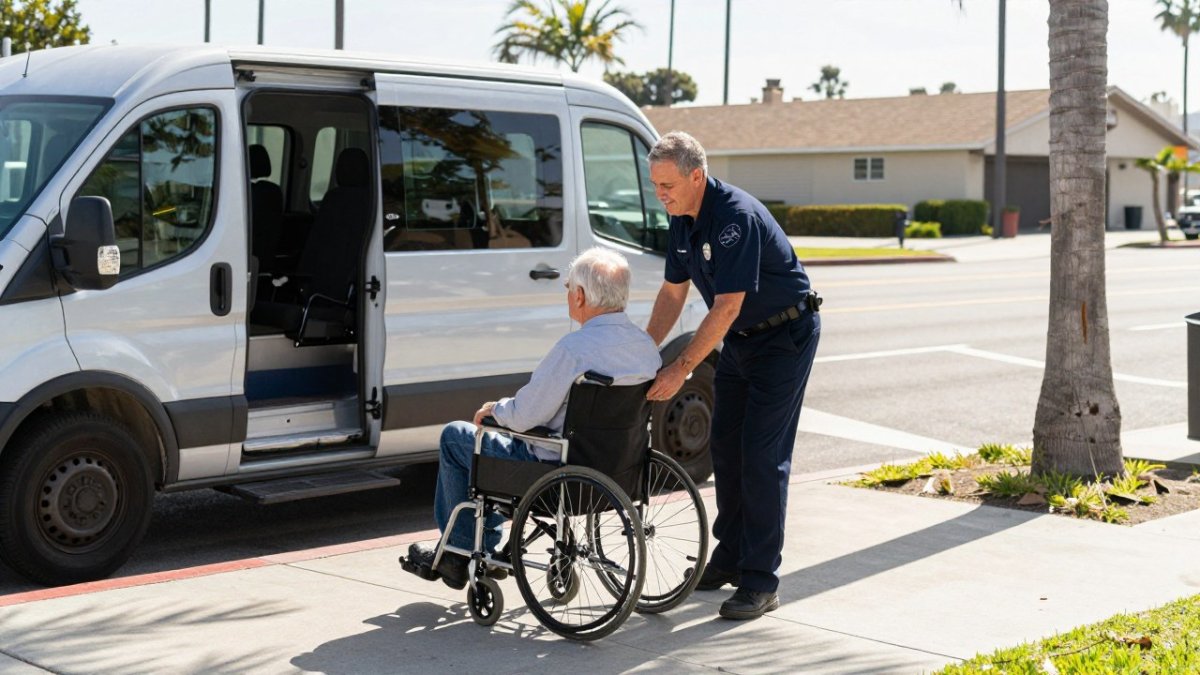
The term "door-through-door" service means the crew assists from the patient's home or pickup location all the way through to the destination, typically the clinic check-in desk or appointment location. It's more than just vehicle transport.
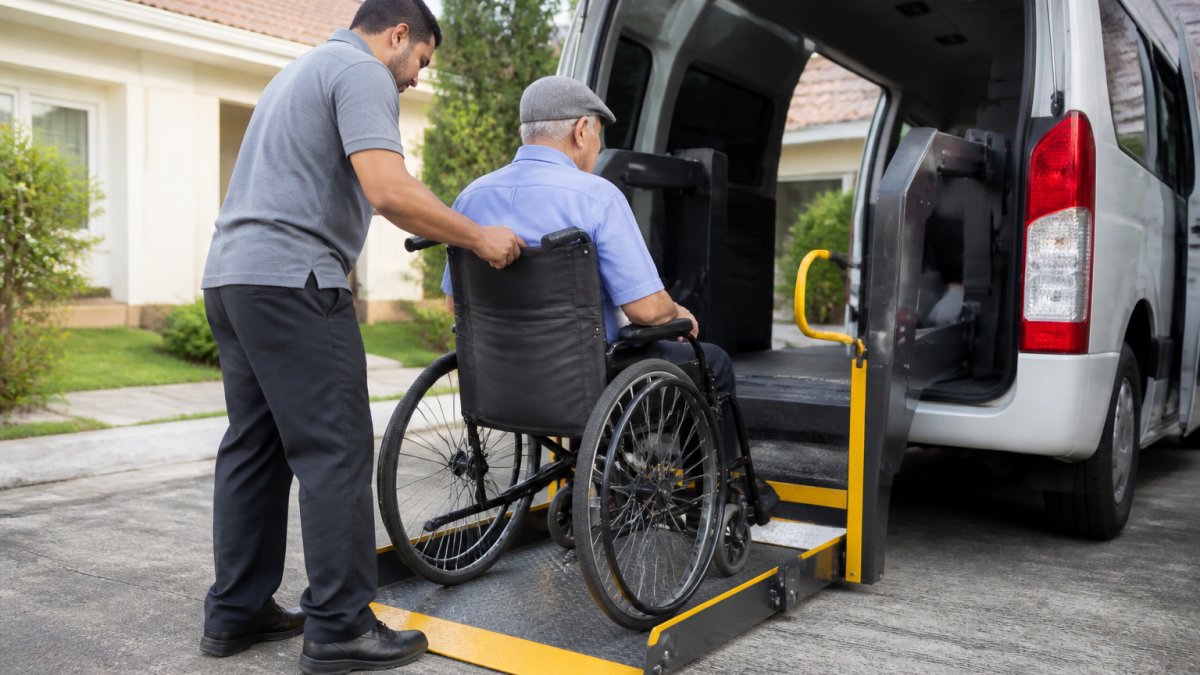
This service typically includes:
- Pickup assistance: The crew arrives, helps the patient get ready if needed, and safely transfers them into the wheelchair or vehicle
- Navigation support: Assistance with curbs, stairs, building entryways, and hallways, not just the vehicle itself
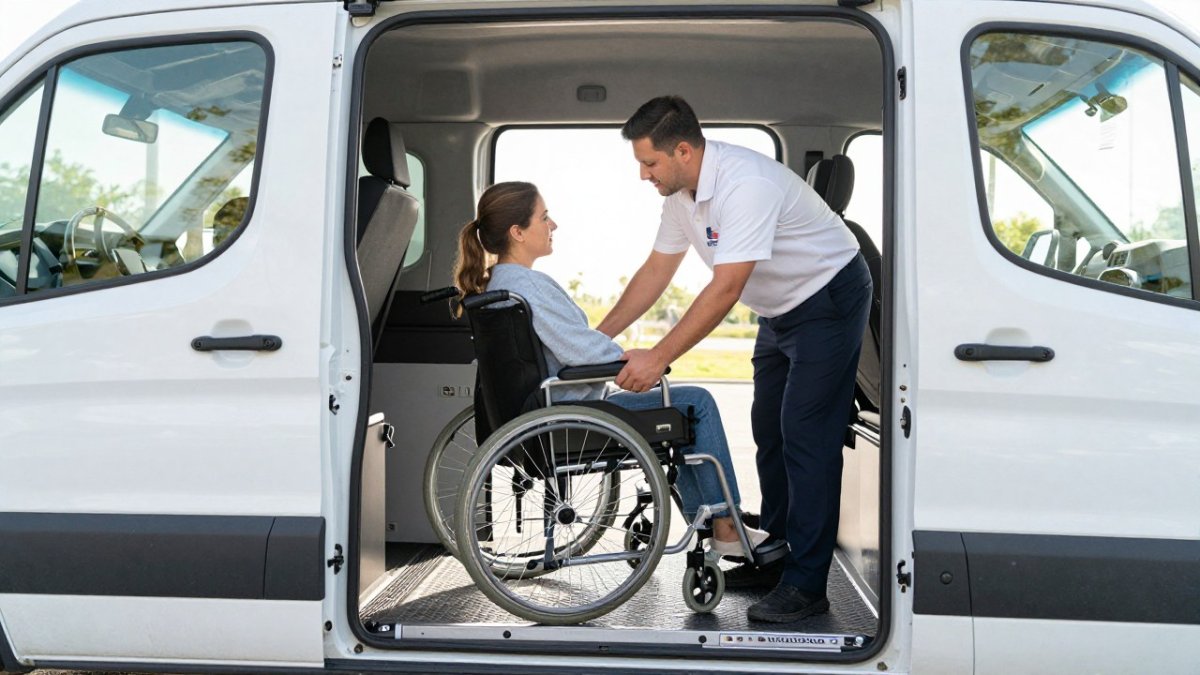
- In-vehicle securement: Proper wheelchair positioning and safety restraints during the ride
- Drop-off assistance: Walking the patient to the appointment location, checking them in if needed, and ensuring they're settled before departure
- Communication: Proactive updates if running late, confirmation of pickup times, and coordination with family or facility staff
What door-through-door does NOT include: It's not personal care assistance (dressing, grooming, toileting). It's transport with trained crew support, not in-home care.
Ready Steady Transportation Services emphasizes this distinction. The crew provides direct assistance from doorway to clinic check-in, which means your loved one isn't left waiting at the curb or struggling to navigate a building alone. This level of support is especially important for seniors, post-surgical patients, and anyone with mobility or cognitive challenges.
Ask any provider specifically what their door-through-door service includes. Some offer only vehicle-level assistance. Others, like Ready Steady Transportation Services, include full journey support.
Accessibility Features and Safety Standards to Compare
Wheelchair van transport vehicles must meet specific accessibility standards, but the quality of equipment and safety systems varies significantly between providers.
ADA Compliance is the baseline. All wheelchair van transport vehicles must comply with the Americans with Disabilities Act, which mandates wheelchair lift or ramp access, interior space for wheelchair positioning, and safety restraint systems.
Beyond ADA requirements, compare these specific features:
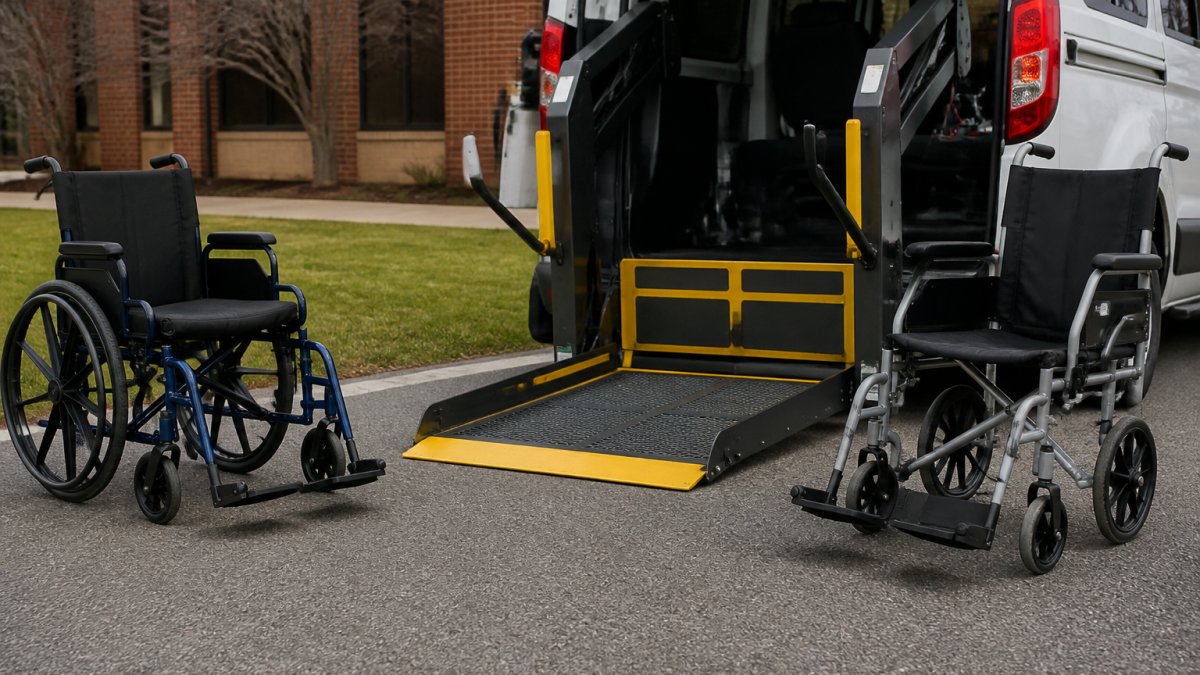
Wheelchair lift vs. ramp: Both are ADA-compliant, but they differ in practice. Lifts can accommodate heavier wheelchairs and power chairs but require the patient to remain seated during lift operation. Ramps allow manual transfer but require more physical effort and aren't suitable for all mobility levels.
Securement systems: The vehicle should have modern tie-down systems specifically designed for wheelchair safety. Ask whether the crew uses four-point securement (gold standard) or two-point systems.
Vehicle condition and maintenance: Ask when the vehicle was last serviced and how often maintenance is performed. A well-maintained vehicle is safer and more reliable.
Crew training in patient handling: Certification matters. EMT-certified crews understand patient safety protocols. BLS-certified crews can respond if a patient experiences a medical emergency. Ask what specific training your crew will have received.
Communication systems: Does the provider have GPS tracking and two-way communication with drivers? This enables proactive updates and faster response if issues arise.
Ready Steady Transportation Services operates ADA-compliant vehicles equipped with both lift and ramp options, depending on patient needs.
Booking Your First Wheelchair Van Transport Appointment
Booking wheelchair van transport typically involves a few straightforward steps, though timelines and requirements vary by provider.
Step 2: Confirm accessibility details. If your home or destination has unusual access challenges, mention them now.
Step 3: Discuss payment and insurance. Ask whether the provider bills Medicaid, Medicare, or private insurance directly, or whether you'll pay out-of-pocket and seek reimbursement.
Step 4: Receive confirmation and proactive updates. A reliable provider sends confirmation the day before and a call or text 30 minutes before arrival. This reduces anxiety and ensures someone is ready for pickup.
Step 5: Communicate any changes immediately. If the appointment time shifts or the patient becomes ill, notify the provider as soon as possible. Providers with organized scheduling can often adjust without penalty.
Ready Steady Transportation Services handles booking through direct contact and coordinates all details to ensure smooth transport.
Choosing a wheelchair van transport service comes down to matching your specific needs, accessibility challenges, appointment frequency, crew training, and reliability, with a provider that genuinely meets those needs.
Ready Steady Transportation Services specializes in door-through-door wheelchair and gurney transport across the Bay Area, with EMT and BLS-certified crews trained to handle patients with sensitivity and skill. Whether you need transport for a one-time post-surgical appointment or ongoing twice-weekly clinic visits, our team is committed to safe, gentle, reliable service. Book a ride with Ready Steady Transportation Services and experience transport designed around your actual needs.
Frequently Asked Questions
What should I compare when choosing a wheelchair van transport service?
Focus on four key areas: accessibility features (lift type, ramp options, vehicle size), service reliability (on-time record, cancellation policy), staff training (EMT or BLS certification, experience with mobility challenges), and pricing structure. Ask about door-through-door assistance, vehicle capacity for your specific wheelchair type, and whether they serve your geographic area. Request references from other families or facilities using their service.
How much does wheelchair van transportation typically cost?
Pricing varies significantly by provider, location, and trip distance. Most services charge a base rate plus per-mile fees beyond an included distance. Contact providers directly for quotes tailored to your specific needs, as pricing depends on frequency, appointment type, and whether you need round-trip or one-way service.
What's the difference between a wheelchair van and a wheelchair taxi?
Wheelchair vans are purpose-built vehicles with ADA-compliant features like lifts, ramps, and secure wheelchair securement systems, operated by trained crews. Wheelchair taxis are adapted vehicles offering basic accessibility but may have limited space and fewer safety features. Vans provide more security for passengers with mobility challenges, better equipment for transfers, and staff trained in patient assistance. Taxis may be faster to book but offer less specialized support.
Does door-through-door wheelchair transportation mean someone helps me inside my home?
Yes. Door-through-door service includes assistance from your home's entrance through to your destination, such as clinic check-in. Trained crew members help navigate curbs, stairs, narrow hallways, and tight doorways. This is different from curb-to-curb service, which only covers pickup and drop-off at the vehicle. Ask providers specifically what assistance is included, some may have limitations based on safety or facility policies.
Can wheelchair van services accommodate my specific wheelchair type?
Most ADA-compliant wheelchair vans accommodate both manual and power wheelchairs, but capacity varies. Ask about maximum wheelchair dimensions, weight limits, and securement methods before booking. Some vehicles handle larger power chairs better than others. Provide your wheelchair's exact measurements and weight when requesting a quote. Reliable providers will confirm compatibility upfront and discuss any special handling needs for your specific chair.